

Northern Ireland Property Market: A Stable Outlook for 2026
As we move into a new year, it’s clear that Northern Ireland’s housing market isn’t following the same trajectory as the rest of the UK. While many regions have seen prices stall or fall, house values here rose faster than anywhere else in Britain in 2025. That strength stems from a unique mix of affordability, high demand and a shortage of new homes coming to market. Below is a look at the latest figures and what they mean for home buyers, investors and renters alike.
Steady price growth and healthy sales
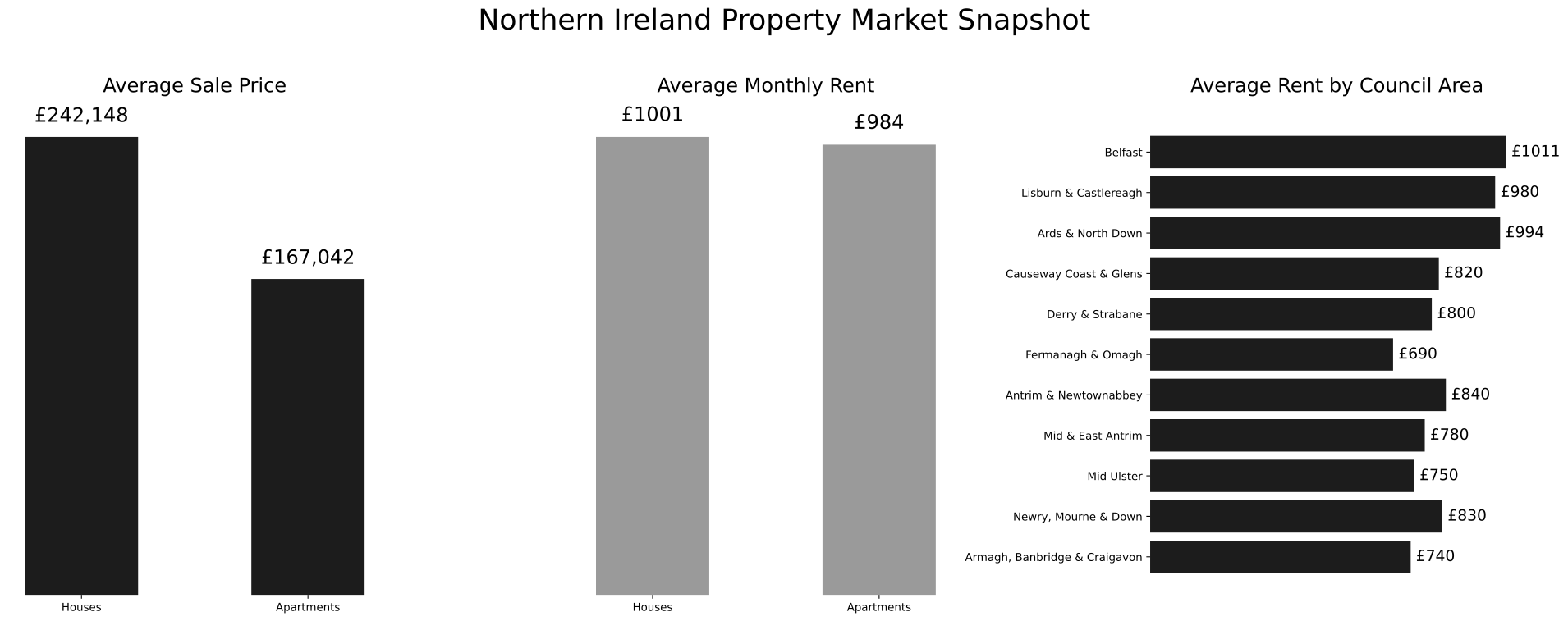
Official figures show that resale properties in Q4 2025 commanded an average price of £235,035, an annual increase of 6.4 %. Houses averaged £242,148, while apartments fetched around £167,042. New homes came to market at roughly £267,000, reflecting higher build costs. Around 5,500 sales were agreed in the quarter, with properties typically taking 46 days to reach sale agreed.
These numbers underscore a pattern of modest, sustainable growth rather than boom‑and‑bust. The Ulster University/Progressive House Price Index recorded a 4.8 % annual uplift and just a 0.4 % rise from the previous quarter. Detached homes and apartments led the way, with semi‑detached houses only softening marginally. Importantly, about 83 % of transactions remained below £300,000, confirming Northern Ireland’s continued affordability compared with much of the UK.
Regional differences
Prices vary significantly by area. In early 2025, Lisburn & Castlereagh topped the table with an average price of £249,101, closely followed by Ards & North Down and Newry, Mourne & Down. At the other end of the scale, Armagh, Banbridge & Craigavon averaged £190,194. Growth rates are also uneven: Mid Ulster (13.5 %) and Derry & Strabane (9.9 %) saw the fastest increases, while some districts experienced softer rises in the latter half of the year. Belfast remains an important market, accounting for roughly 22 % of transactions, but areas like Bangor, Lisburn and Newtownards continue to draw strong demand.
Supply constraints
One of the main drivers behind rising prices is the lack of housing supply. Only 1,576 new dwellings were started and 1,379 completed between July and September 2025. New‑build sales have fallen by more than a third since 2018/19. Meanwhile, social housing construction is grinding to a near‑halt: funding cuts mean only about 400 new social homes can start in 2024/25, despite plans for 2,300 a year. With demand outstripping supply, this shortfall looks set to keep upward pressure on prices and rents.
Renting and yields
Rents have surged as more households compete for the limited stock. By H2 2024 the average rent reached £903 per month, a 6.4 % rise. Belfast was the most expensive area at around £1,011 per month, followed by Lisburn & Castlereagh (£980) and Ards & North Down (£994). By Q4 2025, the NI average rent had risen to £995, with houses letting for £1,001 and apartments for £984. Demand for rentals is intense; PropertyPal recorded about 52 enquiries per listing in Q4 2025, and Reeds Rains reported that enquiries averaged 73 per listing a few months earlier.
For landlords, yields remain attractive. In Belfast the typical gross rental return is around 6.1 %, while Derry/Londonderry offers about 4.3 %. Properties here are around 44 % cheaper than in England, so investment costs are lower. Regeneration schemes in Belfast, Derry and Newry are further enhancing long‑term prospects.
Outlook for 2026
Looking ahead, analysts expect the market to continue on a path of steady expansion. Interest rates came down to 3.75 % in December 2025 and further cuts are anticipated, which should support affordability. PropertyPal anticipates ongoing growth in both prices and sales volumes during the first half of 2026 and predicts rents will rise by 4–5 %. Agent surveys from Hagan Homes show that over 60 % of professionals expect prices to hold or rise modestly.
The main headwinds are supply‑driven. Without a significant uplift in new development—especially social housing—waiting lists and affordability issues are likely to grow. Nonetheless, the region’s relative affordability, strong yields and improving mortgage environment suggest that buyers, investors and developers will still find plenty of opportunity in 2026.
Visualising the market
The chart below presents average sale prices and rents by property type alongside rental costs across the eleven local council areas. It underscores the gap between house and apartment prices, the premium rents in Belfast and Lisburn & Castlereagh, and the overall variation in rental affordability across the region.



Keep up to date
Join our mailing list
Join our mailing list to receive the best property deals straight to your inbox and be first to know about our course release dates.
To see how we may use your information, take a look at our Privacy Policy.