
What Makes a Good Buy to Let Property?
Not every property that looks like a good investment is one. The difference between a buy-to-let that performs consistently for 10+ years and one that causes constant problems often comes down to a handful of specific criteria evaluated at the point of purchase. Here’s what NI Property Girl looks for when assessing a potential buy-to-let acquisition in Northern Ireland.
Strong and consistent rental demand
The single most important factor. A property in an area with strong, sustained demand for rental accommodation will have lower void rates, attract better tenants, and let faster between tenancies. In Northern Ireland, the strongest demand profiles come from:
- Professional tenants near employment centres (Belfast city centre, Titanic Quarter, Lisburn)
- Family tenants in established residential areas with good schools
- Student tenants near Queen’s University Belfast and Ulster University
Demand should be verified at street level — not just area level. Some streets within a postcode significantly outperform others.
Purchase price that makes the numbers work
A good buy-to-let is one where the rental income produces an acceptable yield on the total all-in cost. Target gross yields of 6–8%+ for Northern Ireland buy-to-let in the current market. If the yield doesn’t stack up at the asking price, negotiate — or walk away. No amount of area quality fixes a poor entry price. See: How to calculate ROI like a professional investor.
Structural soundness
A property with structural problems — damp, subsidence, roof issues, failing foundations — is not a buy-to-let opportunity. It’s a project. These problems consume capital and time disproportionately compared to the returns they ultimately produce. Always commission a proper survey before purchasing any investment property. Related: The role of solicitors in NI property transactions.
Achievable and legal lettability
The property must be legally lettable — compliant with Northern Ireland landlord registration requirements, capable of meeting minimum EPC standards, and not subject to any planning or title restrictions that would complicate letting. Properties requiring HMO licensing (letting to 3+ unrelated people) carry additional regulatory burden and cost that should be factored into the investment case.
Scope for value enhancement
The best buy-to-let acquisitions combine current income with an opportunity to add value — through refurbishment that increases achievable rent, or a purchase price that is below comparable value in its area. Both improve the immediate ROI and the medium-term refinancing potential. Related: Renovating for ROI — what adds real value.
Manageable maintenance profile
Older properties, unusual construction types, or properties with complex systems (oil heating, septic tanks, flat roofs) carry higher ongoing maintenance costs than standard modern or traditional brick construction. Budget accordingly, or prefer properties with lower maintenance profiles where possible — especially for a first acquisition.
Transport links and local amenities
Tenants consistently prioritise access to public transport, supermarkets, schools and healthcare. Properties within walking distance of bus or train connections to employment centres let faster and retain tenants longer. This is particularly important for professional tenant targets.
Related reading
- How to calculate ROI like a professional investor
- Renovating for ROI — what adds real value
- The hidden costs investors forget to budget for
- NI Property Girl property sourcing service
Frequently asked questions
What type of property makes the best buy-to-let in Northern Ireland?
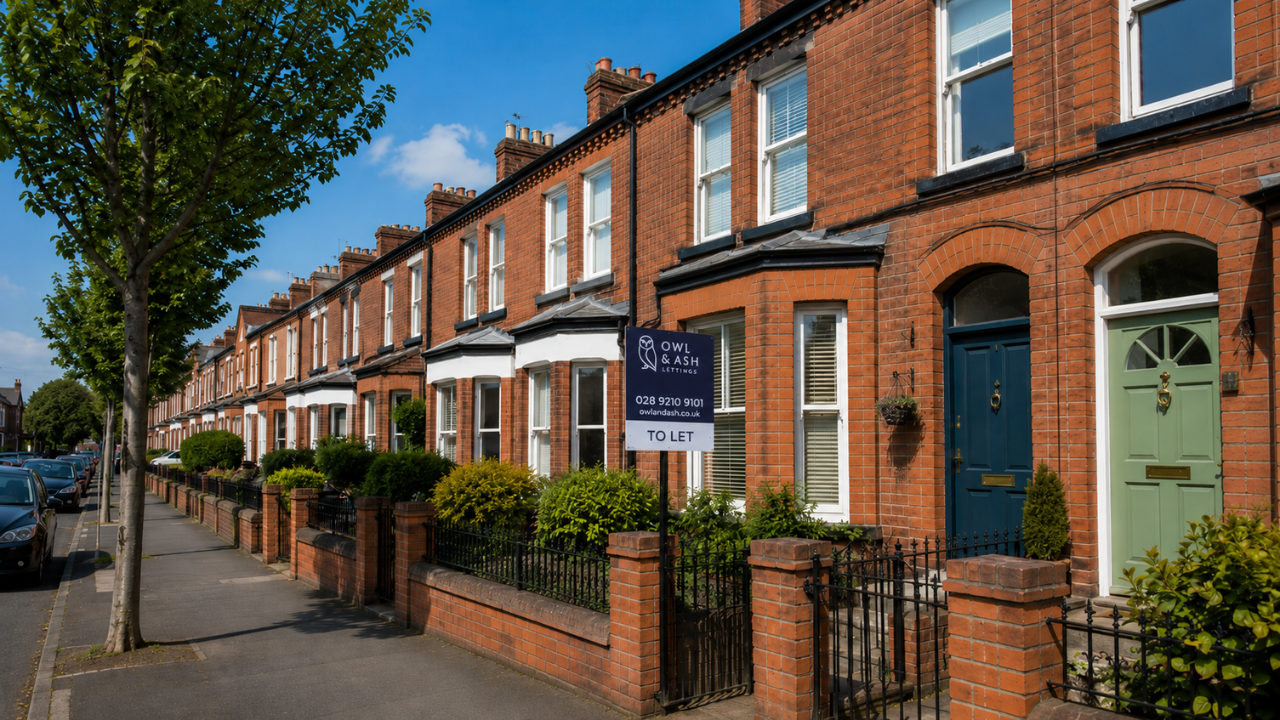
2–3 bedroom mid-terrace and semi-detached houses in established residential areas with good transport links consistently perform best for Northern Ireland buy-to-let. They attract a broad tenant pool (professionals, couples, small families), are straightforward to maintain, and offer good liquidity if you decide to sell. Purpose-built flats can work in specific Belfast locations but carry higher service charges and leasehold complications.
What yield should I target on a Northern Ireland buy-to-let?
Target a minimum of 6% gross yield on your total all-in purchase cost (including Stamp Duty, legal fees and refurbishment). Properties delivering 7–9% gross yield exist in Northern Ireland — these are the benchmark for well-sourced acquisitions. Anything below 5% gross requires a compelling capital growth case to justify.
How do I assess rental demand in a specific Northern Ireland area before buying?
Check current rental listings volume and time-on-market in the area. Speak to local letting agents about void rates and tenant demand. Look at employment proximity and infrastructure. A local buyer’s agent like NI Property Girl will have granular knowledge of which streets and property types perform best within each area — far more useful than any postcode-level data.



Take the Investor Readiness Quiz
60 seconds to find out where you actually stand, plus 3 real NI deals with the numbers included.
To see how we may use your information, take a look at our Privacy Policy.